Dominus Dixit

This is the other song I was commissioned to write, and is much more ambitious in its scope, in that it requires at least six parts, so would take a very brave musical group to attempt it. The initial tale was of a last Christmas mass being held in a crumbling church before its scheduled demolition and conducted by an aging traditionalist priest being pushed into retirement by a young ‘progressive’ bishop. Instead of simply retelling it in song, I expanded it into a dramatic Valjean/Javert-style confrontation between the two complete with a narrator, congregation and angelic chorus, plus some basic stage direction. 

Dominus Dixit

Narrator:

The town abounds with Christmas cheer
As we near that time of year;
But at the church upon the hill,
There’s little seasonal goodwill.

With wrinkles on his hands
An old priest humbly stands
Before a younger bishop
Who has ambitious plans:

Bishop:

“I don’t care about tradition,
This is now the modern age;
We’ll knock down this crumbling mission
And then turn a whole new page,

“We’ll build a towering school of philosophy
To break tradition’s chains and set men free;
No more chants of stale encrusted liturgy,
We will march on forward to modernity.”

Priest:

“No, we will not change a thing,
We’ll be here and we will simply sing
Gloria Patri, et Filio,
et Spiritui Sancto.”

Bishop:

“You’ve got one more week, then I can have you replaced
To give this place a welcome change of pace;
People who’ll follow the trends of fashionable thought
And make all the changes that they ought.”

Priest:

“No, we must not change a word
Of what two thousand years has stood;
Foundations must not be destroyed
Or else, we fall into the void.”

Bishop:

“I’ll give you one more chance to prove me wrong,
To keep up with the times and show you belong
To this age of progress, wonders to behold
With your midnight mass, don’t leave me cold.”

Narrator:

The priest retreats to his small room,
Falls to his knees and in the gloom
All week he cries out fervently
With tears and pain and urgency:

Priest:

“Am I blind to the signs of the times,
Or is this the world that I must fight?
“What can I do? What can I say?
How can I find the narrow way?

“Your saints worked through the centuries
Should we be more than mere trustees
Of what they all have handed down;
Dare we resculpt their holy crown?

“My faith is weak, my body frail,
But in You I cannot fail;
I will stand on what I know
You have approved for us to sow.

“Give me strength and wisdom, too
To know what You would have me do.
Let not my slowing mind obscure
Your loving heart, so true and pure.”

Narrator:

The day arrives, all is prepared,
Though some things could not be repaired;
The wooden crèche is incomplete,
Its heralds missing from their seats.

The bishop notices and scoffs,

Bishop:

“Tradition clings to what is lost.
The angels have abandoned you,
A sign so clear it could get through

“Your hard old head to see your fault:
Look at this decaying vault,
‘Tis only fit to be torn down
And something better for this town

Built in its place to serve their needs,
Not merely chant outdated creeds.”

Priest:

“You’ve made it clear, you’ve had your say
Now let me have my final day.”

Narrator:

A handful of old congregants
Sit in nervous cognizance
Of what hangs over this old hall;
The priest stands from his old oak stall.

The bishop sits with a scornful look
As the priest reads from his gilded book:

Priest:

Dóminus dixit ad me:
Fílius meus es tu;
ego hódie génui te.

Narrator:

Some try to read and sing along
With tired notes that come out wrong.
They falter, stop in shame and groan
Until he is again alone.

Priest:

Quare fremuérunt gentes,
et pópuli meditáti
sunt inánia?

Narrator:

Disheartened he begins to slow
And his surrender starts to show,
Then as he sings the next few words,
Two voices from above are heard:

Angels:

Gloria Patri, et Filio,
et Spiritui Sancto.

{Melody} {Angelic harmony}
Narrator: Angels:
The congregation looks around
To find the source of this sweet sound
Inspired by this heavenly noise
All those present add their voice.
Sicut erat in principio
et nunc et semper
et in saecula
saeculorum. Amen.

{All voices: Melody plus angelic harmonies, an additional (ordinary) harmony joins in on ‘Quare’, ‘Gloria’ and ‘Sicut, to represent the congregation gaining more confidence and strength in their singing.}

Dóminus dixit ad me:
Fílius meus es tu;
ego hódie génui te.
Quare fremuérunt gentes,
et pópuli meditáti
sunt inánia?
Gloria Patri, et Filio,
et Spiritui Sancto.
Sicut erat in principio
et nunc et semper
et in saecula
saeculorum. Amen.

{Above repeats with additional bass voice(s)}

Narrator:

When the chorus is complete and each eye sheds joyful tears
And hearts are moved by beauty like they haven’t been in years,
Many search in vain for whence those voices came
That lit their souls on fire with a bright eternal flame.

The balconies were empty, the vestries were unmanned,
There’s nothing in the doorways that could make a sound so grand.
The bishop, shaken to his core, desperate to find out more,
Rushes up some spiral stairs to find beside some broken chairs

Up in the loft are standing two carved wooden figurines;
The angels from the crèche had not abandoned them it seems.
Contrition overwhelms him and he falls onto his knees,
Confessing sins and attitudes and making humble pleas,

Then carries the two angels down to put them in their place
To herald the Lord’s coming with self-sacrificial grace.
The old priest welcomes him back and together they will stand
To proclaim the Christmas message to this precious, blessed land.

When the Light Came Down

A few years ago, I was approached to convert two different stories of Christmas miracles into singable lyrics to be put to music as part of a Christmas album. I composed and sent off the lyrics, but heard no more about efforts to produce the music and record them since then. I’ll share those lyrics with you now, and perhaps one Christmas in the near future their uplifting harmonies will bring joy and hope to an audience.

It is so long ago that I can’t remember the melody I had in mind for this first one, which concerns a secret meeting of Christians in the darkest depths of Soviet Russia. I will share the other one next week, if I can work out a way to format text into two columns in a blog post.

When the Light Came Down

In a land of cruel repression
And an atmosphere of dread,
The threat of disappearance
Hangs over every head.

The Cheka took the clergy
Who failed to hide themselves;
The gulag’s thirst is never quenched
For bloodshed in its cells.

In a barn out in the country
The faithful dare to meet
To celebrate the Nativity,
That great day in history

When the Light came down
To redeem the earth;
The Word made flesh
Through a pauper’s birth.

The pastor sees a boy he knew
And baptized long ago,
Now grown into a strong young man
Trudging through the snow.

The pastor’s smile is tempered
By a dark but nagging thought;
“Where has he been all of these years,
What battles has he fought?

“Is he lost, in need of saving,
Or an agent of the state,
Here to observe, inform on us
And seal our awful fates?”

But the Light came down,
Leaving heavenly bliss,
To be sacrificed
For such a wretch as this.

His mind made up, the pastor calls
For quiet, then he reads
The words of the old liturgy
That address their deepest needs:

For peace on earth, goodwill to men
And glory upon high
To God who is owed all our praise,
And all things beautifies.

When the pleas move on to ask
For blessings on the nation,
A look upon the young man’s face
Betrays his consternation.

For the Light came down
And showed the world its sin;
Men preferred the dark
To being changed within.

All there commend their lives to Christ
With confident conviction
Alone the young man holds his tongue,
Won’t mouth the benediction.

Sins are confessed, repented of,
Forgiveness is proclaimed.
God’s Mercy is extolled and
Calls to holiness are made.

The Eucharist draws nearer,
God’s purity declared;
His Holy Spirit invited into
All those thus prepared.

Then a Light shone down,
Into that dusty place;
An instinctive fear
Flooded every face.

Could that light be the Cheka,
Arriving to arrest
The faithful for their brazenness,
And thought crimes unconfessed?

No, it’s something more profound,
This old barn is now holy ground,
Each heart is filled with joy and peace,
Each guilty conscience finds release.

The young man stumbles forward,
Pleading for his soul,
The great light struck him blind and he
Now longs to be whole.

For the Light came down
To heal our ills;
Not for fortune, fame,
Or a thousand hills.

“I was here at the state’s behest
To report on faith expressed
In anything but the Soviet
And failure to quail at their threats.

“Forgive me, for I have betrayed
All for which you worked and prayed;
I believed their vicious lies
About you and all they despise.”

The old men gather round and pray
For the scales to fall away
From the eyes of his heart and head
To revive what once was dead.

For the Light came down,
Offering new birth,
To flee the snares of sin
And live a life of worth.

Bronze Sunday/Bronzová neděle

Today is the second Sunday of Advent, here is Bronze Sunday performed by Zaklog the Great

below is the English and Czech version

Bronze Sunday

Bronze shields and spears arranged in ranks
To form the fearsome Greek phalanx
Conquered nations far and wide;
Now there’s a new source of Greek pride:

Bold theories and insightful thoughts
That they debate in marble courts.
“Whose wisdom can outshine our own
Or that of our great pantheon?”

Twixt oracles and temples grand
In Athens a small altar stands
Placed there as a reverent nod
To an as yet unknown god.

But soon That Day will come.


Bronzová neděle

Bronzové štíty a v zákrytu kopí
falangy Řeků když moci se chopí.
Kdo může odolat moci a síle,
přichází Řekové a jejich chvíle.

Nádvoří dlážděné mramorem skvělým
debatám naslouchá, myšlenkám smělým.
“Před naší moudrostí každý se sklání,
vznešený pantheon – bez srovnání!”

V zajetí chrámů, kde lid bohy vzývá,
v Aténách oltář prostý se skrývá
Prostý a vážný uprostřed všeho
k uctění boha neznámého.

Však brzy již vzejde ten den.

A Hope That Burns

This is a song that I hope to record one day, perhaps there will be an opportunity to do at a meeting of musicians in February of next year.

A Hope That Burns

There is a hope that burns
Right through the strongest walls,
Freeing your heart and soul
To truly fly, beyond the sky;

There is a truth so deep
It helps you see the light
That floods the world right through
In every place and every time,

You just need to reflect it,
And redirect it
To make the shadows flee
And help the blind to see

That you are loved, that you are treasured
By Him above, who gives without measure;
There’s nothing that He can’t do, He has good plans for you.

There is a love so pure
It shames the proud to bow,
It fills the poor with joy,
That they’re so much more than a toy.

He’s calling you home, there’s no need to roam;
He’s prepared a place for you under a sky so blue,
Lit by His glory, that’s the point of the story
He’s been telling through every life,
There you can truly thrive,

So come on home, there’s no need to roam;
He’s prepared a place for you under a sky so blue,
Lit by His glory, that’s the point of the story
He’s been telling through every life,
There you can truly thrive,
So come on home.


Image by Johannes Plenio from Pixabay

The Angels Roar

(to the tune of “You Raise Me Up” by Rolf Løvland/Brendan Graham)

The Angels Roar

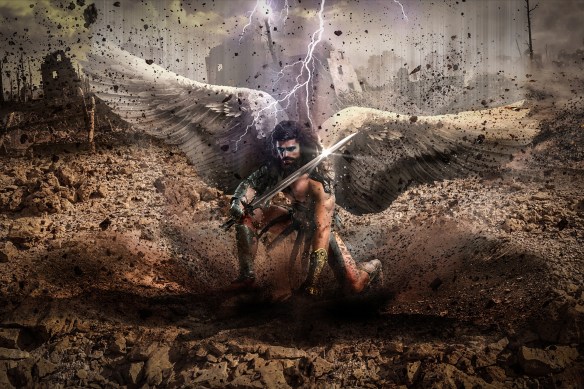
The angels roar in triumph at Your victory,
They stand astounded at Your wondrous plan;
Your glory far outweighs all our sufferings,
Your beauty lifts our hearts with hope again.

Your promises are surer than the mountains,
The path to you is hard but worth each step;
You give us strength to walk on through the deepest pain
Your gift of life is mightier than death.

So when our days are full of heavy burdens,
When it seems the darkness never ends,
There’s one thing of which we can be certain:
We have in You the greatest of all friends.

The world is lost and drowning in its hubris,
Devoid of kindness, bitter to its core,
So deserving of consignment to the abyss,
And yet you came to offer so much more.

The angels roar in triumph at Your victory,
They stand astounded at Your wondrous plan;
Your glory far outweighs all our sufferings,
Your beauty lifts our hearts with hope again.


Image by <a href=”https://pixabay.com/users/Lancios-7858119/?utm_source=link-attribution&amp;utm_medium=referral&amp;utm_campaign=image&amp;utm_content=4361856″>Maurizio Lanciotti</a> from <a href=”https://pixabay.com/?utm_source=link-attribution&amp;utm_medium=referral&amp;utm_campaign=image&amp;utm_content=4361856″>Pixabay</a&gt;

The Light Beyond the Window

I came up with this one during my many recent visits to doctor’s waiting rooms.

The Light Beyond the Window

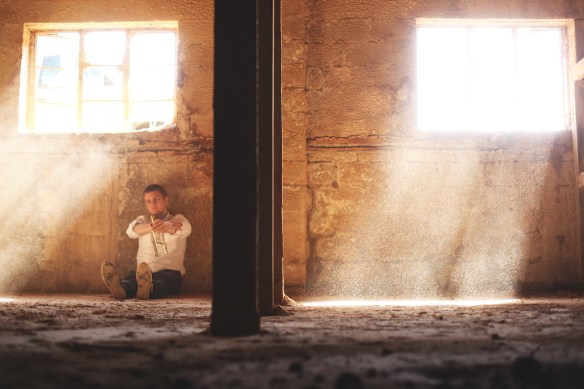
The light beyond the window shines
Into this murky room
Sparing me the horror
Of life in utter gloom

It dances on the floorboards
And sparkles on the tiles
Lifting me onto my feet
To go that extra mile

Without it I could never see
The beauty on display
In flowers, trees, in birds and beasts,
In life that finds a way.

I press against the window
And shield my eyes to view
The source of this great radiance:
So pure, so bright, so true.

Defining and uplifting all
To be their greatest selves,
With courage to keep going
And eagerness to delve

Into the noblest mysteries
Of being, thought and deed;
Not shirking from the questions
Of our lives’ deepest need

For meaning, purpose, value, hope,
When all arounds seems lost;
What core thing we should cling to
When all else must be tossed

The fortitude to see it through
And keep our solemn vow
Ensnaring vanities avoid
Until we humbly bow

Before the throne of judgment
When our works show their worth,
And our heads will lift to see
New heaven and new earth.

A Young Man’s Soul


A Young Man’s Soul

When unseen forces press upon a young man’s soul to find his place
In something so much grander than his daily wants and woes,
What foolish quests and sophistries will the world place in his way,
And how can we direct him to a far more worthy goal?

With stories and examples that inflame his spirit’s noblest fires
Of faithfulness and prudence, vitality and craft,
Courage and discernment, love that wades through mire,
Of fortitude in service with purity of heart

To the One who loves us more than we can ever know
Who invites our souls to soar above the vile flow
Of sewage that this world pretends is culture, virtue, truth;
But really serves the foulest ends and drains away their youth.

He heals our deepest scars of shame and cleanses us of sin
Burns off our dross, shares in our pain, and asks to be let in
That we may tread the narrow way and scale the holy hill;
To bask in bright refreshing day and find our rest until

We’re called to fight beside Him and destroy the Devil’s hordes
Renew what does delight Him and find our great reward,
That all might see true justice done, infused with mercy grand;
The cruellest tyrants are cast down, the humble asked to stand

And look upon the One who gave himself for one and all
Hung upon a brutal cross and given bitter gall
That we might know the joy that He gave up for our own sake
And share in the great glory that was His alone to take.

He knows us, yet still fills these jars of clay with treasure lavishly
And has prepared above the stars a place in His great family.
Where all our virtues are perfected, our flaws are washed away,
All is seen with new perspective, and we are here to stay.

You Really Are Too Good to Us

This year’s bithday poem for my wife:

You Really Are Too Good to Us


You really are too good to us,
So we have to thank you thus
(Plus of course in other ways,
From time to time and day by day).

There’s no one in the world that we would rather know
To hold us as we cry and watch us as we grow,
To celebrate our victories, commiserate our falls,
Encourage us that next time we will surely scale that wall,

Warn us when we wander from the straight and narrow path,
Hand us holy soap when our spirit needs a bath,
Hold us to higher standards than the world around us does,
Show unexpected kindnesses, simply just because

You love to give, to understand and help us lift our heads,
Gently kiss our foreheads when we’re tucked up in our beds,
Loving mother, daughter, friend and sister to a throng
Of souls who’d surely join us in singing you a song

To celebrate all that you are, the difference that you make,
The many blessings you provide, delicious treats you bake,
The comfort and encouragement your simple presence gives
Are heaps of shining evidence that in your heart He lives.

Today’s Sermon: The Music of the Spheres

I had the privilege of preaching in my church today, and it was well received by all. Here it is in its entirety:

2 Peter 1: 2-11 (NIV):

2 Grace and peace be yours in abundance through the knowledge of God and of Jesus our Lord.

3 His divine power has given us everything we need for a godly life through our knowledge of him who called us by his own glory and goodness. 4 Through these he has given us his very great and precious promises, so that through them you may participate in the divine nature, having escaped the corruption in the world caused by evil desires.

5 For this very reason, make every effort to add to your faith goodness; and to goodness, knowledge; 6 and to knowledge, self-control; and to self-control, perseverance; and to perseverance, godliness; 7 and to godliness, mutual affection; and to mutual affection, love. 8 For if you possess these qualities in increasing measure, they will keep you from being ineffective and unproductive in your knowledge of our Lord Jesus Christ. 9 But whoever does not have them is nearsighted and blind, forgetting that they have been cleansed from their past sins.

10 Therefore, my brothers and sisters,[a] make every effort to confirm your calling and election. For if you do these things, you will never stumble, 11 and you will receive a rich welcome into the eternal kingdom of our Lord and Savior Jesus Christ.

This list is a recipe for spiritual growth, and could easily form the basis of a whole series of sermons, but I would like to focus on one small aspect of it, how knowledge of God leads to love for God.

The word translated as faith, pistis means a clinging to things we know to be true from the evidence, even when our emotions tell us to doubt. Goodness is self-explanatory, a long-term determination to seek the truth and do good, whether that is in the form of defending the innocent, standing up to evil, consoling the suffering or declaring the uncomfortable truth as best we can.

We all know the greatest commandment, from Matthew 22:36-40 (NIV):

36 “Teacher, which is the greatest commandment in the Law?”

37 Jesus replied: “‘Love the Lord your God with all your heart and with all your soul and with all your mind.’ 38 This is the first and greatest commandment. 39 And the second is like it: ‘Love your neighbor as yourself.’ 40 All the Law and the Prophets hang on these two commandments.”

Some people really struggle to love God, they have it in their heads that love is a feeling, a mood you have to be in, but that is an unhealthy approach, a dangerous lie sold to us by advertisers and bad storytellers, that will not only lead us to an unhealthy, superficial and fragile relationship with God, but similarly disastrous and unsatisfying relationships with other people.

The attitude of “As soon as you stop entertaining me or make me uncomfortable, I’ll discard you” leaves you alone, shriveled and childish. Like goodness, love is an attitude, a determination and daily decision to seek the best for the object of your love in the long term, even when it is sometimes the last thing that person wants in the short term. It is the highest calling, and a difficult challenge.

Some would say that the key to loving God is gratitude for what He has done for us, for saving us, and they would be right. Gratitude is a cure for all sorts of evils, it helps us to see ourselves as we really are, a healthy motivation for all sorts of good things and a very important part of a loving relationship. However love is more than just gratitude, and gratitude can wear thin. An important part of true, deep love is really getting to know the one that you love, and delighting in who they are.

This is sometimes difficult with people here on earth, because we can discover unpleasant things about them, and this can spoil our impression of what God is like, but with God, who is perfect, we know that there will always be more and more wonderful things to discover and admire, that the greatest appeal of heaven is that we will be there with God, and see Him in His full glory and beauty with none of our own flaws and sins getting in the way.

Many people struggle to love God because they have a false impression of who God is, they imagine he is a cosmic Santa Claus, a magical grandfather who smiles, pats us on the head, gives us a treat and sends us out to play (and when they see the pain and suffering in the world, they start to doubt that He exists at all); others see him as a mean and strict sheriff, watching our every move so he can bring the full hammer of the law down on us the moment we step out of line.

Both of these images are wrong. God is more loving and generous as well as more powerful and just than both of these images.

Others see him as an engineer, who built his creation as a great machine, then left it to run, following its progress with interest and occasionally tweaking it or reprogramming to make sure everything is running properly and it does what he wants it to do, sometimes even stopping it and acting directly to rescue someone or tell his creations something important.

This one is a little better, but like all images of God falls far short of reality, He is far more involved and interested and foundational in His creation than this. No one image can capture God completely, He is far greater and more amazing than we can possibly imagine, but there is a much better approximation, and one that is far from a new idea. First, a quick look at Revelation 4:11:

“You are worthy, our Lord and God, to receive glory and honor and power, for you created all things, and by your will they were created and have their being.”

Not just created, but also have their being. Not just crafted, activated and left to themselves, but actively maintained from moment to moment, from nanosecond to nanosecond. The idea from classical theology, the analogy for the relationship between Creator God and His creation is of a musician and the music that he plays. He is the source of all existence, and is actively involved in absolutely everything that exists, if he stopped actively supporting the existence of the universe, it would no longer exist, just like the music would end as soon as the musician stops playing. We don’t need to worry, the patterns, and harmonies that we know as the Laws of Nature are solid and dependable because God is solid and dependable. It is a powerful analogy that works on multiple levels, in that God’s creation is full of beauty, harmony, and repeating patterns, like well-crafted music.

In ancient times they used to call the motion of the stars and planets musica universalis, the music of the spheres. Even in modern physics, String Theory (which I don’t pretend to fully understand) has vibrating strings as the basis of all matter, with different vibrations like musical notes producing different particles, the notes with which God plays the music of the universe.

Well-known authors of fiction have also famously made use of this imagery, such as C.S. Lewis in The Magician’s Nephew, when Aslan sings Narnia into being and into life, or J.R.R. Tolkein in the Silmarillion where Eru Illuvatar (God) and his Ainur (Holy Ones) together sing the world into existence, and Melkor (the greatest of the Holy Ones) out of pride and lust for power and influence corrupts his part in the music, causing disharmony and twisted, evil creatures, but in a musical battle Eru takes Melkor’s harsh and dissonant part of the song and adds his own higher music to transform the whole into something even more beautiful, and this is all reflected in the world and its history that is created, as Eru announces, “Behold your music!”.

In this analogy of the relationship between God and creation, miracles are not God stopping the music to rearrange the orchestra or fix a broken instrument, but flourishes, fanfares and improvisations that fit into and enhance the overall work.

We are part of that music that God plays, we are utterly dependent on Him in every way, there is nothing we are or have or can have that is not directly reliant on Him. Not only that, but He has given us life, a mind a spirit and the ability to choose to take part in and add to that harmony, joy and beauty, or work against Him and create disharmony, ugliness and suffering.

Many people, and many of His angels, have chosen the latter, resulting in the polluted and corrupted world we live in, causing many to see God as cruel and heartless. If we can look more carefully, past the flaws, we can see a dim reflection of His true nature, his beauty and harmony, his astounding generosity and his power.

We see it in the sunset and in the night sky; in the majesty of mountains, forests, seas and deserts; in the songs of birds and the graceful movements of animals; in the inventiveness of ingenious machines and devices; in the purity of a child’s eyes wide with wonder; in the paintings and music of true artists; in the faithfulness and kindness of true friends and loved ones, in the magic of the seasons.

The triune God who is perfect love, who loves us more than we can ever love him, who gives us all these things and more, who will right all wrongs at His appointed time, sacrificed himself to pay for our part in ruining His creation, and invites us to come and know him, for now in part, but when the time comes we will know Him clearly, perfectly and eternally.

One day He will sing a new song, transforming this song that we know into something better; a song that will never end and never go wrong; music that this current song makes possible, and he invites us to be part of it.

That is something to look forward to and be grateful for. That is who we have the honour of knowing. That is someone to love.

Who else would dare?

Today is my wedding anniversary, here is this year’s poem:

Who else would dare?

Who else would dare to join with me,
With all my flaws and fears?
Who else has set my heart so free
To love you more each year?

There’s no-one I would rather share
My secret pains and joys;
There’s none more worthy of my prayers
For refuge from life’s noise,

For beauty’s glimmer, pure and deep
To wash right through your soul,
For heaven’s peace to fill your sleep
When hard days take their toll,

For my love to give new strength
When all of yours is spent;
That we may share the same wavelength
And know what each one meant;

That our bond may forever be
A taste of His sweet rule
That helps us touch what we can’t see,
The pledged celestial jewel

Of His kingdom on the earth
And life forevermore,
Bought by His death and humble birth
To open up the door.