The Princess and the Goblin, Princess and Curdie

(Orignially posted at the Castalia House Blog)

Part 1 Part 2

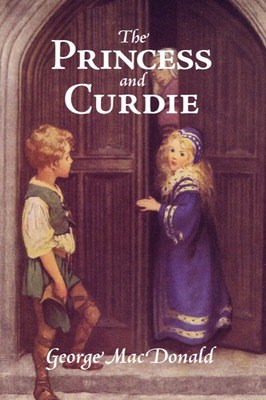
Princess-and-curdie

The Princess and the Goblin and its sequel The Princess and Curdie are quite different from the previous two books I’ve reviewed, in that they have strong characters and relatively well-crafted, engaging plots. They still have their weaknesses, and writers like Lewis, Chesterton and Tolkein far surpassed MacDonald in these aspects of writing, but these two books are a marked improvement. In some ways, they pair up like “The Golden Key” and Phantastes, in that the first book has children as the protagonists and a more child-friendly plot, and the second has adults (or near-adults) as the protagonists and many more mature themes and greater drama. The difference, of course is that in this case rather than merely exhibiting various parallels, the second is a genuine sequel to the first, and the protagonists are the same, only having grown up. Continue reading

Phantastes by George MacDonald

(Originally posted at the Castalia House Blog)

Phantastes

Everything I said last week about “The Golden Key” applies in spades to Phantastes. Though there is a tenuous common narrative thread through the book and continuity is kept, this book overall reads more like a stream of consciousness sketch show, but where the object of each sketch is not comedy, but to inspire awe. I’ll start with a little compare and contrast between the two.

Like in “The Golden Key”, in Phantastes the viewpoint character is a human that travels into fairyland from the human world, is warned about dangers and has many weird and wonderful experiences.

In “The Golden Key”, the protagonists are children who lived just beyond the borders of fairyland in full view of it, constantly aware of its existence, and they enter fairyland simply by walking out of the door (or climbing out of the window and walking there.

In Phantastes, the protagonist Anodos is an adult from the normal human world (a man from Scotland having just turned 21) totally unaware of the existence of fairyland. A little while after meeting a tiny magical creature that appears form his late father’s old secretary desk, he finds a path into fairyland through the designs of his bedroom furnishings turning into the things those designs represent: his washbasin turns into a spring that feeds a clear stream across his bedroom floor, his carpet which he himself designed to look like a field of daisies turns into an actual one, the carved ivy designs on his dressing table become real ivy etc. It seems not unreasonable to me that this inspired some of C.S. Lewis’ gateways into Narnia, such as the painting in the Dawn Treader coming to life.

In “The Golden Key”, the children carefully obey the instructions and heed the warnings they are given, and so the reader never really fears for their safety.

In Phantastes, Anodos basically ignores every warning given to him (about travelling in the forest at night, about an evil seductive beauty, about opening a certain door), a couple of times making me want to reach into the book and slap him. Ignoring these warnings gets him into serious trouble and facing some genuinely scary enemies (a vindictive ash tree that stalks him through the night, a hollow shape changer, an ogre etc.) The self-inflicted problem that sticks with him the longest is his evil shadow that plagues him with cynical eyes so that the magical things in fairyland appear mundane and worthless.

Anodos meets all sorts of creatures and people: beautiful women of one sort or another including a living marble statue that he falls in love with and rescues from its entombing alabaster through the power of song, a maternal figure, a young girl with a mystical globe, Sir Percival of Arthurian legend, a pair of princes who teach him how to fashion armour and together they take on three giants, there are also miniature fey creatures, walking trees, and brutal cultists.

He ventures through all sorts of places: through field and forest, river and sea, cottage and boat, a long and narrowing misty tunnel, a prison tower, a watch tower and a fairy palace with all manner of wondrous rooms and furnishings. In all of these places he meets fantastical creatures, makes fascinating discoveries or faces genuine dangers.

One of the fun things about this work is all the ways you can see it inspired other writers. Here are a few examples:

This little passage about the cynical shadow shows how it inspired the dwarves who proudly disbelieved in the wonders of Aslan’s Country in the Last Battle.

But the most dreadful thing of all was, that I now began to feel something like satisfaction in the presence of the shadow. I began to be rather vain of my attendant, saying to myself, “In a land like this, with so many illusions everywhere, I need his aid to disenchant the things around me. He does away with all appearances, and shows me things in their true colour and form. And I am not one to be fooled with the vanities of the common crowd. I will not see beauty where there is none. I will dare to behold things as they are. And if I live in a waste instead of a paradise, I will live knowing where I live.”

And this description of a forest I think inspired the wood between the worlds in the Magician’s Nephew:

But even here I was struck with the utter stillness. No bird sang. No insect hummed. Not a living creature crossed my way. Yet somehow the whole environment seemed only asleep, and to wear even in sleep an air of expectation. The trees seemed all to have an expression of conscious mystery, as if they said to themselves, “we could, an’ if we would.”

Scattered throughout the book are little asides, beautiful thoughts and insights, for example:

Why are all reflections lovelier than what we call the reality?—not so grand or so strong, it may be, but always lovelier? Fair as is the gliding sloop on the shining sea, the wavering, trembling, unresting sail below is fairer still. Yea, the reflecting ocean itself, reflected in the mirror, has a wondrousness about its waters that somewhat vanishes when I turn towards itself. All mirrors are magic mirrors. The commonest room is a room in a poem when I turn to the glass.

This is the sort of thing that G.K. Chesterton would later become famous for, blending his own stunning insights into his tales even more expertly; perhaps it is no stretch to imagine that he got the idea from reading MacDonald?

There are many more, and I’m sure those who are more widely read than I will see even more connections than I did.

C.S. Lewis once said that a certain quality of the story, a wondrous purity, a ‘bright shadow’ that the whole of Anodos’ adventure was infused with, he later recognised to be holiness. Not just the connotation of purity and goodness, but also the word’s original meaning of something being set apart for a higher purpose, otherworldly and different, yet reflected in the world around us.

As I have noted, the story is meandering, with a plot that is really a series of loosely connected short tales and scenes that perhaps both reflects the chaotic, enchanting, otherworldy and glorious nature of fairyland as well as MacDonald’s admitted shortcomings as a writer. The character growth of Anodos on my first reading also seems a little haphazard, while the supporting cast also lack character depth. The ending also felt a little sudden, though maybe it wouldn’t on a second reading.

Other writers took inspiration from his astounding worlds and combined it with compelling characters and well-crafted plots to produce some of the greatest literature of the early twentieth century. It is as if MacDonald mined a seam containing brilliant undiscovered jewels and presented them to the world, then others came afterwards to expertly cut and set those gems into exquisite jewellery. In the process those later artists became more beloved and popular than the one on whose shoulders they stood.

Even if it turns out that his particular style is not to your liking, MacDonald’s contribution to the world of literature is one that we should all be grateful for, and the above metaphor will become even more apt as we look next week at The Princess and The Goblin together with its sequel The Princess and Curdie.

 

The Golden Key by George MacDonald

(This was originally posted over at the Castalia house blog)

George MacDonald (1824-1905) was a Scottish poet, author and Christian minister. His fantasy novels made him a household name in his day, but he is now far less well known than the writers he inspired and influenced, despite their numerous and enthusiastic praise of his pioneering work. Those writers include Ursula K Leguin, Lewis Carrol, G.K. Chesterton, W.H. Auden, Mark Twain, Madeleine L’Engle and he was a childhood favourite of Tolkien, though as an adult Tolkien did not view MacDonald’s work so favourably. Perhaps his most enthusiastic and vocal fan, and the author through which I and many others have rediscovered MacDonald is C.S. Lewis, who not only publically declared MacDonald to be his master, and made him his guide through heaven in The Great Divorce, but also put together a collection of his sayings, entitled George MacDonald: An Anthology. So what is it about MacDonald and his work that made him so influential, and yet so forgotten now (apart from the usual generation gap)? I won’t be providing any detailed analysis, merely giving my own impressions as a fan of Lewis and Chesterton trying to slowly catch up with the classical education he missed out on as a boy.

I will start with his one of his most famous short fairy tales, “The Golden Key” first published in 1867, then next time I’ll look at the novel that is widely credited with launching the fantasy genre, Phantastes (1858) then return one more time for one of his later works, The Princess and The Goblin (1872) and its sequel The Princess and Curdie (1875). Don’t expect me to compare these works with other stories of his, these will be all I have sampled so far. Feel free to suggest other works to look at later when I have some more reading time available (an increasingly valuable resource nowadays), but this series will be limited to these three instalments.

.

“The Golden Key” is quite unlike modern books (at least the ones I have read), one small quotation may help to sum up the kind of adventure it takes you on:

“But in Fairyland it is quite different. Things that look real in this country look very thin indeed in Fairyland, while some of the things that here cannot stand still for a moment, will not move there.”

This is what reading “The Golden Key” was like for me, and I expect many others; there is little in the way of narrative tension or character depth and it has a rambling, dreamlike plot (which is most likely why Tolkien grew to dislike his work as an adult). It is more a series of moments of wonder and purity that stay with you long after having put the book down, images and concepts that spark your imagination and gently transform you, such as fish that gracefully swim through the air and happily sacrifice themselves to grant their eaters the power to understand the creatures of the forest. After doing so the fish is rewarded by being transformed into an aeranth, a small angelic creature. Then there is wading knee-deep through layers of magnificent shadows that fall from somewhere high up in the sky; meeting ancient figures – the more ancient, the more youthful their appearance and behaviour seem to us; time flowing at very different rates; magnificent glimpses of a much wider world whose beauties cannot be fully put into words.

The story follows two children, who are given the nicknames Mossy and Tangle (we never discover their real names), who find their way into the forest of Fairyland for different reasons, Mossy chases the end of a rainbow in search of the titular golden key that his great-aunt told him about, eventually finding it, while Tangle runs from a home in which she is neglected, to escape the tricks of some mischievous fairies.

They are guided individually by the air fish to the house of a beautiful woman that calls herself Grandmother, who has lived for thousands of years, but doesn’t have time to grow old. Mossy asks her where the lock is that the golden key opens, she doesn’t know and so sends them to the Old Man of the Sea to find the answer. On the way they pass through the layers of shadows and become determined to find the land from where the shadows fall.

To describe the rest of the plot would be to spoil it, it is a relatively short work and available online for free in various places via project Gutenberg, among others. Though this story is definitely aimed at children, it has many beautiful concepts for adults to mull over and enjoy and a wonderfully uplifting ending – I am glad to have read it and expanded my horizons a little, and in my opinion it makes for a very good introduction to MacDonald’s work (at least the amount I have read, if you like this, you’ll most likely like his other work). Give it a read and refresh your mind.

Next week I’ll be looking at Phantastes, discussing the influences I could see on the authors I know and giving some of my own thoughts as to why he fell out of favour.

The Best Sci Phi Journal Articles

As promised, here are my article picks for each issue of Sci Phi Journal (again, this is not to say that the other articles in each issue were bad, many of them were very strong, just these are the ones that stood out to me):

Issue 1:

“ “I am Groot”: An Aristotelian Reflection on Space Aliens and Substance by Daniel Vecchio

An look at what Aristotle would have made of Rocket Racoon and Groot from Guardians of the Galaxy, and the questions of identity that they raise.

Issue 2:

“The Making of the Fellowship: Concepts of the Good in the Lord of the Rings” by Tom Simon

A breathtaking survey of what the various “Speaking peoples” in Middle Earth regarded as the highest good.

Issue 3:

“The Tyrant’s Headache” by Eric Schwitzgebel

A fun critique of a functionalist philosophy of pain

Issue 4:

Now this is a really tough pick, as all of the articles are very good, but I’m going to go for “The Confluence Between Scientific and Literary Imagination” By Arlan Andrews, which looks at the common source of both literary and scientific creativity, and how one often inspires the other (especially when it comes to sci-fi).

Issue 5:

“On Emotion Drugs” by Jeff Corkern

A fresh perspective on the question of whether recreational ‘emotion’ drugs should be legalised not in terms of personal liberty or their unintended side-effects, but through looking at the core purpose of the drugs themselves.

Issue 6:

“General Directive 18: Self-Defensive Genocide in the Starfire Universe” by Patrick S. Baker

Is genocide ‘in self-defence’ ever justified?

Issue 7:

I have to be honest, I didn’t think the articles in Issue 7 were as strong as in other issues – they were all decent and interesting without any one article particularly grabbing me.

Jeff Corkern’s “On the Influence of Emotion Drugs on History” looks at the factors that may have retarded the development of the pre-Spanish American civilizations that were so quickly wiped out, and Jeff Racho’s “Mad Max:Fury Road – Surrounded by Political Sound and Fury, Signifying Nothing”, which is more of a film review than an article, looks at whether this film’s controversial hype of being a ‘feminist’ film actually stands up to scrutiny.

If You Haven’t Tried Sci Phi Journal yet, You’re Missing Out

The Sci Phi Journal, which is publishing Beyond the Mist, is in need of additional readers to remain sustainable, and if the readership does not grow sufficiently, it might have to fold before completing the scheduled serialization. I would encourage anyone who is undecided about whether to buy an issue, anyone who likes the sound of stories and articles that truly engage your brain, to take a chance and try it, there are many excellent reads to choose from. If you have already bought some issues, tell your friends about it or write an amazon review. The highlights among the stories for me are as follows (this is not to say that the stories I do not mention are poor, and some of you may disagree with my personal picks, but these are the ones that stood out to me): Continue reading

Character Profiles

A question was asked on facebook a little while ago about using character profiles to flesh out characters in the stories that people write.

In the superversiveSF livestream, the point was made that each character should have two conflicting desires, an undercurrent of some kind that goes against their role in the story to give their character depth, to be more human, for their part in the story to be more real and dramatic.

When we want to go into more detail with a character, in particular one that will be used a lot, there are many things to consider and keep consistent. I’ll outline what I do below:(which may or may not be the best approach, you decide):

I’ll start with their role in the story, and some dialogue they take part in, then from there I use an approximation of this sort of mental checklist (when I’m being really organized, I’ll actually write it out):

Name:

Including nicknames or aliases, think about what the name means, is it something that describes them well, a reputation they have rightly or wrongly earned, or something they are resentful of and rebelling against?

Occupation:

How they currently support themselves. Is it something they enjoy, or something they have been forced to do by someone else’s edict, or by the circumstances (e.g. the best of a bad set of options)?

Education/training/skills:

What comes more naturally as well as what they have invested time and effort into learning (can be major overlaps with ‘strengths’ below).

History:

How they were brought up, in what culture (and subculture), what character-forming events they have been through/people they have known that reinforced/undermined/added to their upbringing, helped them mature (or not), expanded their horizons or made them cynical or secretive.

Beliefs/ values/ morals:

What are they comfortable with doing, what are they prepared to do when the situation demands, and what is overstepping the line for them? What guiding principles are important to them, and how do these differ from those around them? Are these changing, or something they cling to through the turbulence of life?

Strengths/ Weaknesses:

Both in terms of physical and technical abilities and psychologically, what they can and can’t cope with well.

Hopes/aims/goals:

What their ultimate goal is beyond the immediate situation, what keeps them motivated to carry on, or tempts them to take the easy way out.

Fears:

What is personally at stake for them if they fail, how invested they are in the situation (or mission), what ghosts of their past still haunt them, what aspects of normal life are incomprehensible or intimidating to them. (Can be major overlaps here with ‘weaknesses’ above)

That’s my checklist, what would you add?

Book Review – Plural of Helen of Troy by John C. Wright

How many stories have you read or films have you watched that incorporate time travel as part of the plot? Quite a few, I expect. And how many of those actually deal with the morality of time travel itself, instead of purely using it as a mechanism to generate a fish out of water scenario? Not so many. What would society look like if technologies existed to manipulate time however you saw fit?

Plural of Helen of Troy is one of a collection of short stories that deal with these very questions, entitled City Beyond Time, Tales of the Fall of Metachronopolis.

Murder in Metachronopols and Plural of Helen of Troy bookend this collection of short stories and are both set in the city outside of time itself, in which the Time Wardens rule with impunity and seemingly limitless power, able to retroactively go back in time and manipulate every event to reach the outcome they desire, transporting people and technology from every time period in history to their magnificent timeless city to act as their servants and playthings. Both stories are centred around a hard-boiled film-noir style detective who used to work for the Time Wardens as a problem solver (i.e. hitman). In Murder in Metachronopolis, he is attempting to solve his own murder in the future, in Plural of Helen of Troy, he is trying to save the most beautiful woman in history, one of many versions of Helen of Troy, from being attacked by someone who is close to the Time Wardens and aided by one of their deadliest robotic henchmen.

Both stories are told out of chronological sequence, which suits a story about time manipulation and is done so well that it is not confusing, instead each jump forward and backward in time either throws new light on or raises the stakes of what is happening in the main story thread. There is a lot of great humour, for example:

I ran up the nearer ramp toward the girl and sprinted toward my death.

I’d had a pretty good life, I guess. I had no complaints.

Strike that. My life stank like an incontinent skunk pie sandwich with no mustard, if one of the slices was the crusty heel no one likes to eat, and I had loads of complaints.

And the action sequences are intense and tactically brilliant, including how the deadlock is broken between two weapon systems that can perfectly predict and counteract each other.

Of the two stories, I’d say that Murder in Metachronopolis has more depth and emotional impact, while Plural of Helen of Troy is more fun. Both are masterfully crafted, insightful and rewarding to read, and I cannot recommend them enough. I could say much the same for every story in the collection without reservation. If I had to pick between the above two stories, I’d go for Murder in Metachronopolis, but it was first published earlier than the rest, hence ineligible for the Hugo this year.

If you haven’t yet sampled this great collection from a master of the art, you are missing out.

On Leonard Nimoy’s Passing

Over at SuperversiveSF, I have added my own thoughts to the many eulogies offered to the man who’s most famous role gained almost archetypal status, that of the benevolent Vulcan philosopher Mr. Spock:

For me, Leonard Nimoy always embodied the wise and self-controlled paternal figure, whose gentleness was that of a man who was well aware of his own strength and the damage it can cause, so showed restraint wherever possible, but was always prepared to use that great strength to defend the innocent and stand up to evil wherever it appeared. In that his persona was that of that greatest of ancient figures, the warrior poet, who is not only strong and skilled in the arts of war, but also possesses the moral clarity to know the proper time and place to use those arts for the good of those around him and society as a whole. He also embodied the deep thinker, the guardian to another world of wonder and mystery, into which he would allow us to peer ever so briefly and whet our appetite to begin our own search for truth and wisdom.

Read the rest

Nothing Good Ever Happened At the Point of a Gun – SuperversiveSF

Over at Superversive SF, Amy Sterling Casil weighs in on the recent massacre in Paris:


All I will add is that this is yet another reminder, for those that need to be reminded, that freedom is neither free nor the default state of mankind. It is immensely costly, and those who enjoy the benefits of freedom the most are often the most isolated from and unaware of the daily sacrifices needed and made to preserve and defend it.

There are and have always been entities, groups and philosophies that hate freedom and given the opportunity will gleefully slaughter or crush the rest of us underfoot, whether we are innocent or not, and silence all dissent. My own father-in-law was imprisoned for handing out leaflets in favour of free elections, a friend of the family was imprisoned and tortured for close to a decade for being ‘too great a religious influence’. That regime is now thankfully gone, but there are many others like it, and many who pine for it to come back or for something similar to ‘succeed’ where it failed.

My gratitude and utmost respect goes out to those who each day put their lives on the line and do all they can to not give such people the opportunities they crave.

Talent Contests and the Superversive

I am happy to announce that I am now a regular contributor over at SuperversiveSF, where some of my old posts from this blog can be found, together with some new stuff that won’t appear here. This piece will be posted both here and there at roughly the same time.

Talent Contests and the Superversive

I once wrote a very rambling post on this issue, I’ll not bore you with that one, merely provide a link to it at the end. I’m not going to talk about the sort of talent shows you might see at school or church where there is no competition going on, but the mass-market talent contests such as Superstar, x-factor, This or that country’s got talent and whatever other such formats you are familiar with or will arise in the future.

Here there’s no-one declaring every entrant to be a winner just for taking part, here there is genuine evaluation of artistic qualities, of whatever sort are being sought by the given contest. Here we want people who massively overrate their own abilities to receive an honest (if not withering) assessment, and those who have a genuine and well developed gift but are full of doubt about themselves to receive the acclaim and encouragement they need to further hone their abilities and produce something truly worthwhile.

Many people in the audience at the show are there to savour the maulings at the hands of the panel, some to poke fun at the people too full of themselves, and some just hope for a decent bit of entertainment from somewhere, but what really makes their day and ends up going viral (and what the organisers of the contest if not the audience really hope for) is when in the midst of the drudgery and humdrum performers a humble unassuming package contains a gift so refined that the audience gains a peek into a higher world, there is the faintest glimmer of heaven opening just a crack to give everyone the briefest whiff of celestial air; true beauty, living and dynamic that bears witness to the truth. Talent contests are a public hunt for the superversive.

Many such instances have been captured through the years where the lesson to draw is not to judge a book by its cover, but there was one such incident (there may be others that I am unaware of, I don’t follow these shows, only occasionally catch one of the viral videos) that illustrated a great deal more than that, opening my eyes to the value and purpose of friendship, and by extension, the value and purpose of art.

I am referring to the pair of Jonathan Antoine and Charlotte Jaconelli. Over the course of their progress through Britain’s Got Talent, in particular their initial audition (but also in their performance in the next round), demonstrated not just performances of high artistic merit, but strengths of character and a depth of friendship that is worth remembering and emulating. At one point one was in a position of power over the other and then later the situation was reversed. At those times each used that power to support and defend the other rather than grab glory for themselves. Harsh criticism was not used as an excuse to mope and give up, but as motivation to focus and improve.

Each complemented the other and enabled the other to reach new heights. Neither one of them would have been able to make that transformative journey without the other, and both of them acknowledged and appreciated that fact, and valued each other as friends. Inquiries as to whether they were romantically involved with each other were not denied with a sense of shame, but simply answered with the disarming vitality of innocence.

I understand that they have now gone their separate ways artistically, but even should everythgin fall apart form this point on, through their journey together they showed me the following things, for which I am grateful:

Firstly, the purpose of good art is to soar and take the audience with you – to catch a glimpse of the divine, take hold of a little piece of heaven, bring it down to earth and share it.

Secondly, the purpose of friendship is to help someone else to soar, to overcome their flaws and achieve something worthwhile.

Thirdly, by extension, the purpose of parenthood is to prepare your children to soar, to grow, strengthen and properly use their wings, show them which way is up, instil in them the character they need to recognize and persevere towards worthy goals, and cultivate in them the skills they need to reach them.

Not bad for a pair of teenagers, eh?


The original rambling article