Silver Sunday

We continue from last week with part three of this Advent series, inspired by the Bohemian folk names for the four Advent Sundays. After iron and bronze, this week is silver:

Silver Sunday

Bags of silver coins change hands
For human lives from distant lands:
Some caught in war, some caught at crime,
Some could not pay their debts in time.

With chains on their bruised feet and hands,
Worth thirty silver to a man;
Some foolishly still dare to dream
That they could one day be redeemed.

But soon That Day will come.


For more of my poetry, there are two of my collections available on Amazon:

Selected Verse - Heroes and Wonders

Selected Verse - Faith and Family

Bronze Sunday

We continue from last week with part two of this Advent series, inspired by the Bohemian folk names for the four Advent Sundays. Last week was iron, this week is bronze:

Bronze Sunday

Bronze shields and spears arranged in ranks,
To form the fearsome Greek phalanx,
Conquered nations far and wide;
Now there’s a new source of Greek pride:

Bold theories and insightful thoughts
That they debate in marble courts.
“Whose wisdom can outshine our own
Or that of our great pantheon?”

Twixt oracles and temples grand
In Athens a small altar stands
Placed there as a reverent nod
To an as yet unknown god.

But soon That Day will come.


For more of my poetry, there are two of my collections available on Amazon:

Selected Verse - Heroes and Wonders

Selected Verse - Faith and Family

Iron Sunday

As this is the first Sunday of Advent, I will be posting the short first part of what will (hopefully 🙂 ) be a five-part poem, each part themed according to the Czech (Bohemian) folk names for the four Sundays of Advent, Iron Sunday, Bronze Sunday, Silver Sunday and Gold Sunday, followed up by one on Christmas Day itself, which this year also falls on a Sunday (in the American/British tradition anyway, over here the evening of the 24th is the time for the Christmas feast and exchanging of presents. Since, being a British and Czech family, we celebrate both, I think I can get away with making the most of this conjunction of dates)

Iron Sunday

Nations crushed by iron wheels,
With gladii and oblong shields,
As far as human eyes can see
Reigns Caesar unopposed, supreme.

He sees himself as a great god
To rule all with an iron rod.
“My empire has been built to last
My might will never be surpassed.”

But soon That Day will come.

Treasure Hunt

I had the following little adventure with my 5-year-old son yesterday (he’s recently discovered the magic of imagination)

Treasure Hunt

After fighting pirate hordes
That swept across our lawn,
We find among their broken swords
A map that’s crudely drawn.

“We must find all the treasure
Before the sun goes down,
Or else the scary Nightmare Moon
Will take over this town!”

We set off across the road
And look under the trees,
Guided by my five-year-old
When suddenly he sees:

A blue stone that’s a diamond
In our guide’s little hand;
Golden leaves are now gold leaf
That’s strewn across the land.

Brown stones are great ingots
Of purest Spanish gold,
Black pebbles are obsidian carved
From lava flows grown cold.

Our bounty’s brought to Mummy,
Displayed with gleaming pride;
When my son grins from ear to ear
Her smile is just as wide.

Where does the wonder come from?

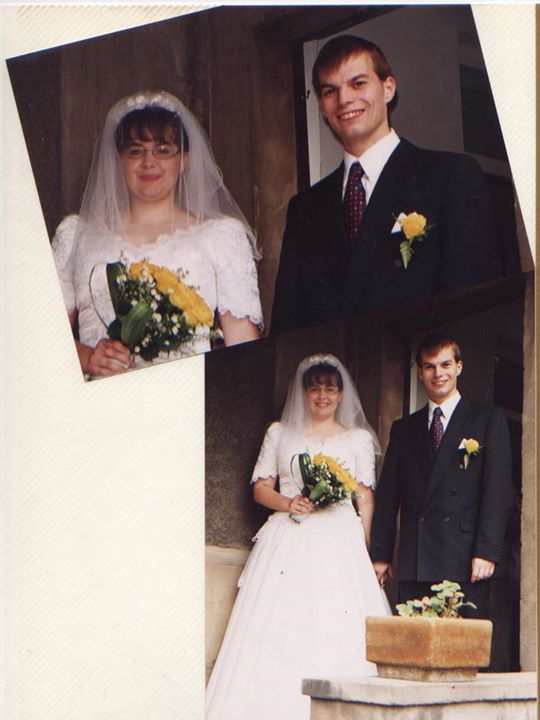
wedding2It is my fifteenth wedding anniversary today, here is this year’s poem:

Where does the wonder come from?

Where does the wonder come from
That fills me as I think of you?
The privilege I have to share your life,
And know you love to share mine, too?

What can I be, what can I see
And share with you to lift your soul?
What can I learn, how can I grow,
And through your pain with love console?

What does our Lord require of us,
We two upon a path for one?
To unify our hearts and toils;
To calmly rest, with glee to run,

With overflowing joy take flight
And soar up to the healing light
That guides us through the passing night
Aflame with glory, clothed in might.

In daily troubles, trials and tears
Through precious days, weeks, months and years,
Cling to Him and thus together
Bind by an unbreaking tether.

United we can go and face
All challenges along the race
To win the great eternal prize
That He has set before our eyes.

Twenty-Eight and a Half

For my wife’s birthday:

Twenty-Eight and a Half

Wife and mother treasured far
Above all else, for who you are;
We celebrate another stage
In your ripe and youthful age,

Whereupon we share in cake,
Perhaps food served you as you wake
(If circumstances will allow),
In any case to show you how

Much we wish you all the best
And hope you can at least find rest
In what we try to do for you
(should our plans go off askew).

Your efforts we appreciate
And when you let us stay up late
We’ll try not to antagonize
Provide you with a nice surprise

And Let you know you’re loved and valued just the way you are.

Reviewer Praise for Selected Verse – Heroes and Wonders

James Sale, of the Society of Classical Poets, had this to say about Selected Verse- Heroes and Wonders:

Poetry is a delicate balance of language that is prone to either too much yin or too much yang; or put another way, as the poet steers his or her course like Odysseus towards his true soul, Penelope, waiting at home, he must venture through the double danger of Scylla on the one side and Charybdis on the other. The danger is either writing the yin of non-poetry which we often call free verse—though it is neither free (pure prose with lines) nor verse (since structure-less)—or writing the yang of verse, an over-emphasis on conventional forms, dead tropes, and language reminiscent of past centuries rather than the living vernacular of today.

Some of the most popular poetry revered today veers so dangerously to the yin side that, like Odysseus’s devoured crew, the audience of poetry dwindles as well; people can’t tell if what they are reading is prose or just a cruel joke that academia has played on their seemingly sophomoric intellects. Ben Zwycky’s collection, Selected Verse: Heroes and Wonders, is a daring reversal of direction of the ship’s helm, careening us toward a different monster in a maneuver that is both thrilling and at times unsuccessful.

Heroes and Wonders is, as his title indicates, generally an excellent collection of verse: full of wholesome sentiments, familiar themes of love, honour, resisting evil, and at its best has some pithy aphoristic expressions. Indeed, his best verses are his shortest ones. His final verse, “The Beast,” is some 17 pages long and in my view far too extensive to be readable; but contrast that with “Days,” the second poem in the collection. The opening stanza shows Ben at his best:


Days of wonder, days of hope,
Days that help you learn and cope;
Days of refuge, days of peace,
Days that give your heart release.


The simple repetition, the pleasing and easy rhymes, all help convey a sense of goodness and strength, and  the anaphora of Days in the quatrains suddenly breaks free of that structure in a final concluding couplet, which gives the poem a nice symmetry:


Each new day is heaven-sent,
Make every day a day well spent.


The final couplet indeed could become a mantra for the kind of people I meet in my own other specialist field of management consultancy: specifically, time management gurus who will love it!


Within this simple goodness and strength, there are also gems that paint, not exquisitely but with the right breadth, the universal longing of the human soul without obtrusive preachiness; for example, these lines from “Beauty’s Message”:


All flowing from the source of all, who we’ll see face to face,
Where holiness is merged with love as justice is with grace.
There is our true purpose, there is our true home;
That is why down here on earth our hearts will always roam.


But in all this there is a sense of predictability, both in the subject matter, the approach to the subject matter, and the forms themselves. Whilst I am a great advocate of the importance of rhyme in and for poetry, the poet must always master rhyme and not be subjected by it.


Unfortunately, in some of Ben’s verse the rhyme has clearly taken control of the meaning rather than the other way round. So, in his poem “The Wise Men” we get:


This all our fathers saw and knew,
Most honoured gospel scribe Matthew.
We know their tale is one small part
Of a greater work of art.


We have here two issues: in the first couplet the oblique (oblique here meaning the rhyming of a stressed with an unstressed syllable) rhyming of knew/Matthew, which seems strained, and the effect of such an oblique rhyme being comic rather than serious; and in the second couplet the sheer conventionality of the two masculine rhymes so close together.


But that aside, if you like verse with simple diction, pleasing rhymes, heroic and moral themes, then this book could well be for you.

http://classicalpoets.org/poetry-review-heroes-and-wonders-by-ben-zwycky-2015

My response (which I have posted there) is as follows:

Thank you for the kind words, James.

It is indeed my goal, as a member of the superversive literary movement to create entertaining work that encourages virtue, courage and a sense of beauty and value, to fight against nihilistic drudgery and build up the foundations of civilization.

I am a flawed writer with almost no formal training in poetry, there are no doubt a few instances of my sacrificing content too much to fit a rhythm or rhyme. However I find it interesting that you pick out that stanza from “Wise Men”, since the situation there is actually the other way around. The structure was sacrificed at this point because of the content and historical context, they are the key to the purpose of my writing the whole piece.

It was inspired by the intriguing possibility (with some scholarly support) that the source of the Matthean birth narrative is the Magi themselves, and that Matthew obtained this knowledge by meeting with their sons. The poem is then something of a dramatization of what that encounter could have looked like, with the sons recounting the oral tradition they received from their fathers, and then asking what it all meant.

In those days oral traditions were often crafted into verse, or used puns, thematic patterns, vivid imagery and other linguistic tricks to aid their memorisation. For the original Magi, this very unusual adventure would have raised a large number of questions: all the intrigue, the signs in the sky, the further signs they no doubt heard about from talking with Joseph, all for a baby born in a pauper’s stall? They knew that something of major significance was going to come from all of this, and the great adventure they had been part of was only the beginning, one small component of a divine masterwork.

Decades had passed since any news of the supposed king of the Jews had been heard, the original Magi had almost certainly passed on by the time Matthew came along to gather additional material for his biography.

The sons would have joyfully repeated the flowing, artfully sculpted and polished oral tradition they were taught and then, with trembling lips at the prospect of their great questions being answered (perhaps compounded by only sharing a second or third language with the former tax collector, since they lived a long way from each other), slightly stumble over their words as they summarise “That is what our fathers told us, we know that there is much more to this than what we have heard. We have helped you, now please tell us the fuller story that you have, so that we can know what our fathers longed to understand all these years.”

The whole poem is building up to that life-changing moment for them.

Perhaps I could have conveyed this more clearly in the work itself, but that is what I was attempting to do.

If you’d like to take a look at the full collection, click the image below:

Selected Verse - Heroes and Wonders

How to Remember?

Today is the day I commemorate the first time I contacted my wife (by tradition, I email her a poem last thing at night on the first of May, she reads it on the second; this reflects the fact that I first emailed her on the first, but she discovered the message in her inbox the day after). Here is this year’s effort:

How to Remember?

On this notable occasion
Of our first communication,
I search for inspiration
As for how to celebrate.

‘Twas with hope and consternation
That I sat at my workstation
To compose a salutation
To a possible soul mate.

Like my in-person mumbling,
I penned a note quite fumbling,
And to compound my bumbling,
It contained a broken link.

Your message sent back to me
(whose detailed words elude me)
Said openly and truly
That Alex’s advice stinks.

No angel choir euphoric
Nor wild ride meteoric
Told us this choice historic
Would transform both our lives.

Instead a growing friendship
Unveiling a deep kinship
That grew into a courtship
That to this day still thrives.

More poems telling the the story of the first contact, courtship and subsequent marriage of my wife and I can be found in my first poetry collection, Selected Verse – Faith and Family, the ebook of which is now permanently reduced to 99 cents (or territory equivalent) on amazon

Selected Verse - Faith and Family

Shadow and Light

In the beginning all lived in the light
Each creature was a glorious and noble sight
Every work was a joy, every burden light
All sheltered by a hand of benevolent might

Then one was tempted by a lofty goal
That she could be greater than her wondrous soul
She saw a little shortcut, took a little bite
Then began to sense that she should fear the coming night.

Her husband shared her misery by joining in her act
They sought the shadows to obscure their little selfish pact
Their trespass was discovered, their paradise was lost,
But still they could have no idea how much their sin would cost.

Their descendants travelled further from the true and rightful path
With pride leading to jealousy, to strife and deadly wrath.
Reckoning was more delayed from each sinner’s offence,
And so it seemed that shadows could deflect all consequence.

Filled with the thrill of their success, they honed deceitful arts,
And sought out deeper darkness to betray more trusting hearts.
They took great pride in their own guile and ingenuity,
As they dug down into the mire of dark iniquity.

Piece by piece, a gnawing hole grew in their sordid souls,
And of all those that they harmed, who played their sordid roles.
Vengeance was paid back in full and bitterness increased,
Transforming once majestic creatures into wretched beasts.

More and more they soaked in darkness, ate and drank the void
Hoping it would hide their degradation and avoid
The mounting pile of consequence, the troubling pangs of guilt
That festered in the putrid cores that they themselves had built.

They dug so deep, the mire collapsed and buried them alive
They did not dare admit they now had no hope to survive
Their deeds closed in around them, ‘til they were paralyzed,
And then they gave a feeble cry to Him they had despised,

The faintest pinprick of pure light then seeped into their hole
And grew, exposing all the wretchedness of their vile souls.
Ashamed and terrified, they scramble weakly, helplessly
Away from piercing truth’s fierce glare to foul obscurity.

But the light pursues them still, ‘til they surrender all,
Awaiting their destruction in hell’s deep fiery halls
But all the mire around and in them is then torn away
And piled upon an innocent who chose the suffering way.

He takes the pain, abandonment and suffering they earned,
Dies in their place for all the wholesome choices that they spurned
Their stains are all removed and their souls have all been freed;
He rises up in glory and then offers them a creed:

To follow in His footsteps, though they may stumble still;
He’ll catch them as they fall if they will only seek His will,
A whole new life before them, a noble worthwhile way,
A journey of abundant love towards eternal day.

The Beast – Parts 11 and 12

Part 1

Part 10


Daric looks in horror as she shifts into a form
That shows faint hints of her old self, but still it makes him squirm.
He runs the fallen minion through, then charges at the beast,
She blocks his path and views him like a predator its feast.

He shows the flat of his great sword, its strange glow gives her pause;
Her feral eyes reflect it as she growls and bares her claws.
“Beatrice, please, don’t heed his lies; I’m Daric, your true friend;
Love and sacrifice are things he cannot comprehend.”

She trembles at his gentle words, but the beast is stronger still,
She snaps back to her vicious state as he exerts his will.
“Your ignorance will bring you down, all power is mine to give;
It’s only for the sport of it that we still let you live.”

The two beasts circle round him, looking for a chance
To pounce and rip his throat out in this deadly evil dance.
He backs against the cabin wall to cut their angles down.
“This coward is no threat to us, let’s go and raid the town.”

They turn and head towards the woods, he quickly scrambles after,
The beast jags left and back around, and roars with mocking laughter
“We have you trapped in open ground, no barriers to hide you,
Your guard will drop eventually, and then we will divide you.”

His vision’s width is limited by his visor’s plate;
He blinks blood from his eyes and spots the movement just too late.
The beast pounces onto his back, sinks a fang into his neck;
He throws the beast off, tearing through trapezius muscle wrecked.

With one last force of will, he plunges down with his blessed blade
Into the prone beast’s midriff, but as contact’s to be made,
She pounces forward, knocks him down and pins him to the ground;
His helmet pops off, they lock eyes, then turn to the vile sound

Of wailing shrieks and sizzling flesh, the blade’s pinned through its leg
Into the earth so it can’t move, just pitifully beg
As flames and smoke pour from the wound, creating a great cloud;
It writhes and shrivels into dust, with a thunderclap so loud

It knocks her off him several yards, the cloud then comes alive,
Swirling like a great tornado, then it starts to dive.
He presses on his neck and slowly climbs to his weak knees,
Grasps the sword and waves it as if swatting angry bees.

The cloud backs out of his sword’s reach, then rushes into her.
She springs up to her feet and then gives out a joyful purr.
She snarls at him, then falters as she sees his holy blade;
One last hope occurs as his vision starts to fade.

“Beatrice,” he slurs, and stabs the sword into the earth.
“I gladly give my life for yours, whatever that is worth.
This makeshift cross can take your curse, grasp it and be free;
If I die before you live, then please remember me.”

With that he falls and lies quite still; she smells his salty blood,
His tender flesh so succulent, and hunger like a flood
Washes over her and draws her to his fallen form,
And yet a small voice whispers in the middle of that storm

That there is more to life than feasting, victory and war,
That this pile of meat is a good man that she adored,
And so she reaches fearfully for that repugnant steel;
It burns with purest agony, but she clings on with zeal.

The evil cloud is funnelled through the sword to the abyss;
Its final scream of terror fades into the faintest hiss.
Near-exhausted, Beatrice pulls the sword out from the ground,
She looks around the battlefield and whistles for her hounds.

When they come running from the trees, she’s not angry they fled
From the terrifying beast, she’s glad that they’re not dead.
She moves to Daric’s fallen form and listens for his breath;
It’s shallow, short and weakening, he’s very near to death.

“My Daric, you have honoured me as if I were a queen;
No matter what you thought you were, you were a knight to me.
For what it’s worth, I dub you with the sword that set me free.”
She puts the sword face on his wound, it hisses, glows brightly.

“Arise, Sir Daric, Knight of all I am and have to give,
Know that you have won my heart, but most of all, please live.”
Her dogs lick all the gore away, she drags him back inside
Lays him in her own soft bed, keeps herself occupied

With cooking, washing, nursing him with all she can provide;
She sends a dog to bring some help while she stays by his side.
Days later Daric slowly wakes, is welcomed with her smile;
She kisses him and tells him he still needs to rest a while.

Her door’s been fixed, her house is warm and festively spruced up;
She brings him fresh stream water in a simple wooden cup.
Her smile drops, “Now that you know about my heinous crime,
Do you still wish to stay with me, through pain and toil and grime?”

“My love,” he says, “a day with you is worth a thousand more
Without your beauty and your grace, whatever lies in store.
It was the beast who acted through your captive hands and eyes.”
“I remember clearly now, he used my wounded pride.

“It felt just like an awful dream, I could not but comply.”
“Perhaps those are false memories; he served the Prince of lies.
But even if it was your fault, all that and more besides,
I can’t condemn, since there but for the grace of God go I.

“Please be my wife, that we may be and work this farm as one;
‘Twould be my crowning moment, my greatest treasure won.”
The priest arrives, but not alone, the news has spread far and wide
Of the great battle that took place, and that the beast has died.

The king and all his pageantry arrive in state to bless
And honour Daric’s courage, to publicly express
His gratitude for this great feat, give gold and tracts of land,
And approve the ceremony that joins them hand in hand.

“What God and king have joined as one, let man not separate;
This marriage is a victory over rage and reckless hate.
May the ballad of their love be sung and oft retold,
Until it is a treasured myth of ‘that grand age of old.’ ”


This poem in its entirety is the finale to my second poetry collection, Selected Verse – Heroes and Wonders, now available on Kindle, which looks at heroes and wonders of the grand type we see depicted in our favourite epics as well as inspiring everyday examples that only a few ever notice. Beauty to enjoy, courage to inspire, wisdom and folly to admire and avoid:

(click the image below to take a look)
Heroes and Wonders concept003